- Why this matters — and why it's ours to do
- Start with the right mindset
- The core method: the spiral approach
- Integrating through language subjects
- Integrating through mathematics
- Integrating through science
- Every other subject counts too
- Beyond the classroom: whole-school practice
- Four dignity activities you can run tomorrow
- A framework for empowering students
- Challenges — and how to meet them
- Adapt it to your context
01Why this matters — and why it's ours to do
Human trafficking takes many forms: sexual exploitation, forced labour, debt bondage, domestic servitude, forced begging, child soldiers, even forced marriage. With so many faces, the hard truth is that anyone can become a victim — a child, a teenager, a young adult, anyone. In Southeast Asia, countries including Thailand, Cambodia and Vietnam sit along major source, transit and destination routes, which is exactly why this issue has to be taken seriously and taught early.
Ending trafficking is Talitha Kum's great dream, and it is a long road. But awareness taught in a classroom is not a small thing — it is one of the most powerful forms of prevention a young person can carry for life. As educators we are already in the room with them. The message of this guide is simple: it's our time. We act now to protect tomorrow.
"Talitha Kum" — Little girl, I say to you, arise. The Aramaic phrase from the Gospel of Mark that gives the campaign its name and its hope: every person can be lifted back to life and dignity.
02Start with the right mindset
Before any lesson plan, two inner shifts make everything else possible.
1. Believe you can do it
The first and most vital step is optimism. "If there's a will, there's a way." Teachers who begin from "yes, we can do this" find ways to integrate the topic; teachers who begin from doubt experience it as one more burden. Positivity is not naïve here — it is the fuel that keeps a long mission moving.
2. Embrace it as a mission, not a task
This work is not extra homework handed down by administrators. It flows from the very heart of the teaching vocation: to protect the safety and the future of your students. Framed that way, integrating anti-trafficking awareness stops feeling like paperwork and starts feeling like what teaching is for.
03The core method: the spiral approach
Integration is not "have one lesson and mention trafficking." The method that makes it work is the spiral approach (from educational theorist Jerome Bruner): the same topic is revisited at every grade level, each time with greater complexity.
From Grade 1 through Grade 9, trafficking is woven into lessons where it naturally fits — but what students explore deepens each year. It is not the same "what is trafficking?" lesson repeated identically; that would bore students and they'd tune out. Instead the coverage widens as the spiral climbs, matching what each age can genuinely grasp.
- Deepens understanding over time instead of overwhelming young children with too much at once.
- Builds long-term retention — each year gently refreshes and extends the year before.
- Keeps interest alive — there's always something new, so students never feel "I already know this."
- Protects the naïve learner — younger students receive only what is safe and useful for them to know.
A shared aim anchors the spiral: by the time students finish Grade 6, they have a solid working understanding of what trafficking is; by Grade 9, they can analyse real cases and articulate how to help stop it.
04Integrating through language subjects
In a language subject (English, or your national language), the signature move is unlocking vocabulary — introducing and defining key words so every student, at every level, shares the same understanding of trafficking. Notice how the number and difficulty of words grows as the spiral rises. Choose a lesson where the theme genuinely fits — not every lesson needs it.
| Grade | Lesson it fits into | How trafficking is integrated | Sample vocabulary |
|---|---|---|---|
| 1 | Jobs / professions | Which professions can help you in danger; who to ask for help to avoid becoming a victim. | human trafficking, slavery, danger |
| 2 | Community places | Which places are safe, why to avoid empty/uncrowded spots, where to report suspicious activity. | safety, crowd |
| 3 | Daily routine | The do's and don'ts when meeting a stranger. | vigilant, stranger, victim, dangerous |
| 4 | Self-introduction | What personal information should never be shared with strangers or unknown parties. | trafficker, privacy, prohibited, scam, confidential |
| 5 | Countries & nationalities | Which countries have high trafficking rates; who traffickers target as "ideal" victims. | trauma, forced labour, abuse, injustice, target, smuggling |
| 6 | Traffic signs & symbols | Hand signals used to ask for help in dangerous situations. | smugglers, coaxed, signals, crime, isolate, fraud, exploitation |
| 7 | Fact vs. opinion | Move beyond vocabulary to soliciting ideas — telling fact from opinion in real trafficking cases. | (discussion-based) |
| 8 | Kinds of news | Screen current trafficking news locally and globally; solicit students' opinions and possible actions. | (discussion-based) |
| 9 | Paragraph & essay writing | Analyse case texts and write essays on how they can help combat trafficking. | (analysis & writing) |
Note how Grades 1–6 focus on building shared vocabulary and staying on the same page, while Grades 7–9 shift to eliciting the students' own opinions and actions.
05Integrating through mathematics
Maths integrates trafficking differently — not through vocabulary, but by using real statistics and cases as the examples and data students practise on. From Grade 7 up, teachers add a second step: after working the numbers, they ask students what they can contribute to stop trafficking.
| Grade | Maths topic | How trafficking is integrated |
|---|---|---|
| 1 | Reading & writing numbers | Use short passages about trafficking over the years to practise reading and writing numbers. |
| 2 | Rounding off numbers | Round off real victim statistics (e.g. 2022–2025). |
| 3 | Comparing numbers (>, <, =) | Compare victim statistics across years to see which is greater or smaller. |
| 4 | Multi-digit addition/subtraction; charts; percentages | Calculate how figures rose or fell over five years; interpret charts; convert whole numbers to percentages. |
| 7–9 | Percentage, fractions, exponents, probability | Use trafficking data in worked examples — then ask: "Now that you see this probability/percentage, what can you do?" |
06Integrating through science
Science connects trafficking to real-life situations. This is where the topic can touch on the body, health and the environment — always pitched to what the age group can handle.
| Grade | Science topic | How trafficking is integrated |
|---|---|---|
| 1 | Body parts | The sacredness of the human body — what should not be seen or touched by others. |
| 2 | Human life cycle | How traffickers can target a person at any stage of life (e.g. child labour, forced marriage). |
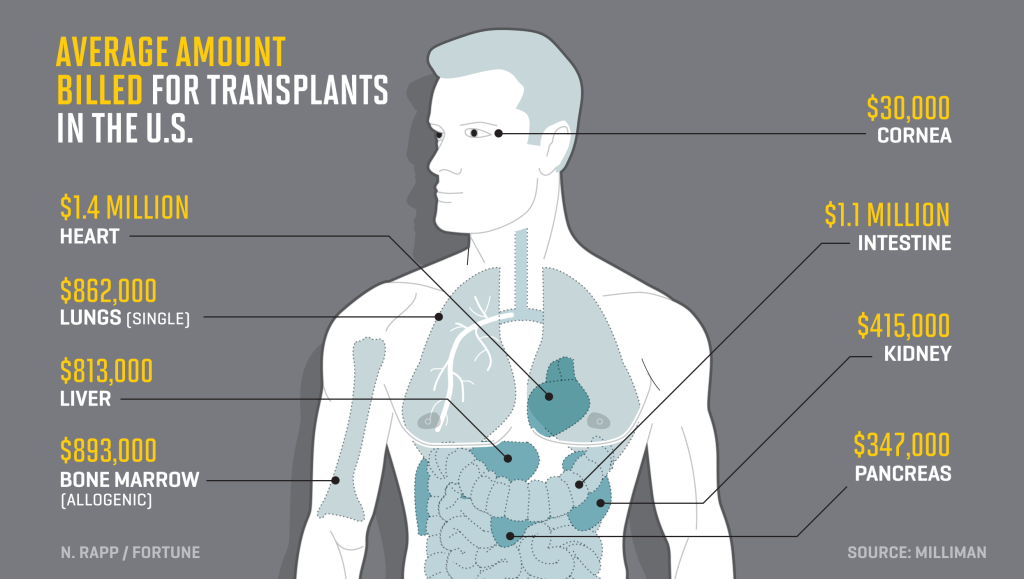
| 3 | Body organs | Awareness of organ trafficking. |
| 4 | Climate change | How displacement, destroyed livelihoods and poverty push people toward risky migration and exploitation. |
| 5 | Natural fibres | Why appropriate clothing matters, in the context of avoiding exploitation. |
| 6 | Inventions & technology | How social media and new tech are used by traffickers to recruit and exploit. |
| 7 | Trauma & health | Understanding and sympathising with the trauma survivors carry. |
| 8 | Human reproductive system | An age-appropriate look at exploitation such as surrogacy-related trafficking. |
| 9 | Genetics / abnormalities | Handled sensitively in connection with sex trafficking. |
07Every other subject counts too
Integration isn't limited to the "core" subjects. Wherever it fits, it belongs.
- Career & Technology. Verifying information before trusting anyone who offers a job or "help" (see the featured lesson below).
- PE & Health. Teach the distress hand signal and basic escape techniques.
- Home Economics. Entrepreneurship, finding work and home management — skills that lower a young person's risk of being victimised.
- Art. Visual-communication design and even puppetry — one class staged a puppet role-play dramatising a trafficking scenario, beautifully done by students and teacher together.
- Social Studies. Historical exploitation and children's rights.
Featured lesson · "Appearances Can Be Deceptive"
Career & TechnologyObjective
Students can explain why it is important to verify information before trusting people who offer jobs or assistance.
The hook — guess the shadow
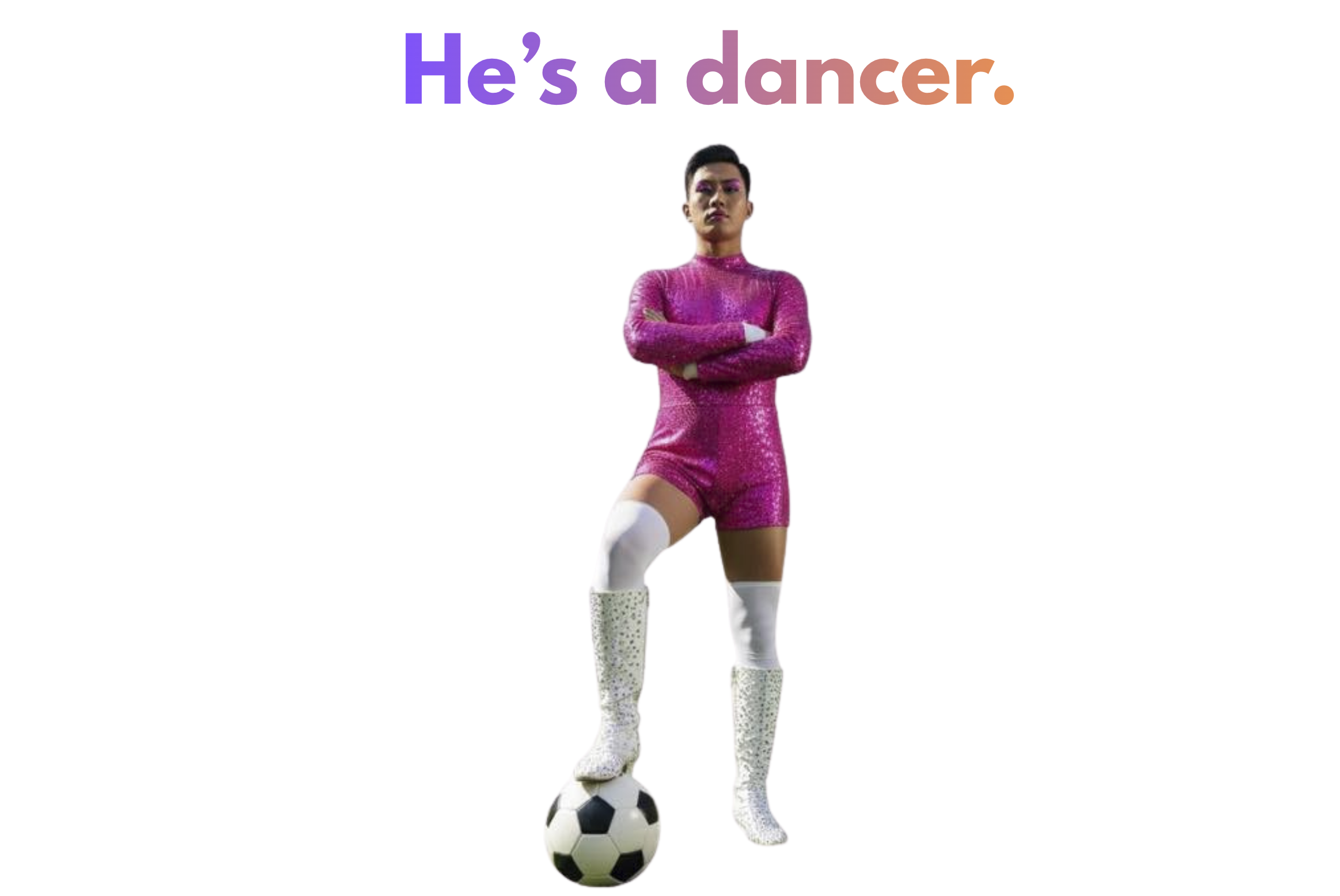
Show students the shadow (silhouette) of an occupation and let them guess what it is. Then reveal the full picture — and surprise them: it isn't what they expected. Use that moment to land the lesson: appearances can be deceptive. An offer, a person or a "job" that looks one way at first glance can turn out to be something entirely different underneath.

Bridge to trafficking awareness
Connect the surprise to real life: traffickers often disguise exploitation as an attractive job, a kind favour or a trusted friend. Before trusting an offer of work or help, students should pause and verify — who is really offering this, and can it be checked with someone they trust?
Adapt it
Younger grades: keep it playful — the shadow game and the simple rule "check before you trust." Older grades: extend into how to verify an online job offer, spot red flags, and confirm information through a trusted adult or official source.
More worked lesson examples
Each of these is one turn of the spiral — a single subject lesson with a clear objective and a hands-on hook. Swap in your own curriculum topics and adjust the depth to your students.
Lesson · "Words That Keep Us Safe"
EnglishObjective
Students can define and explain key vocabulary related to personal safety and human trafficking.
How to run it
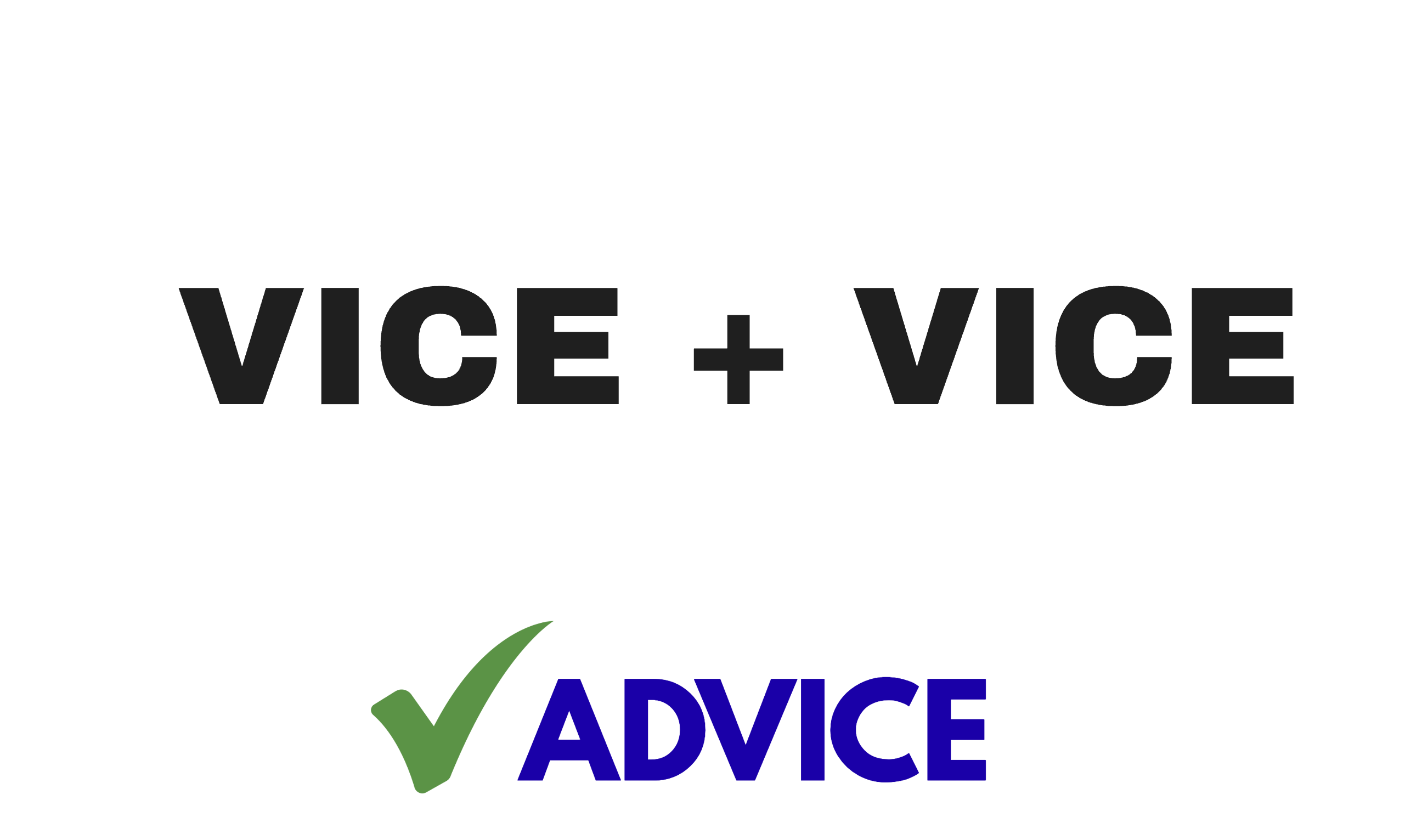
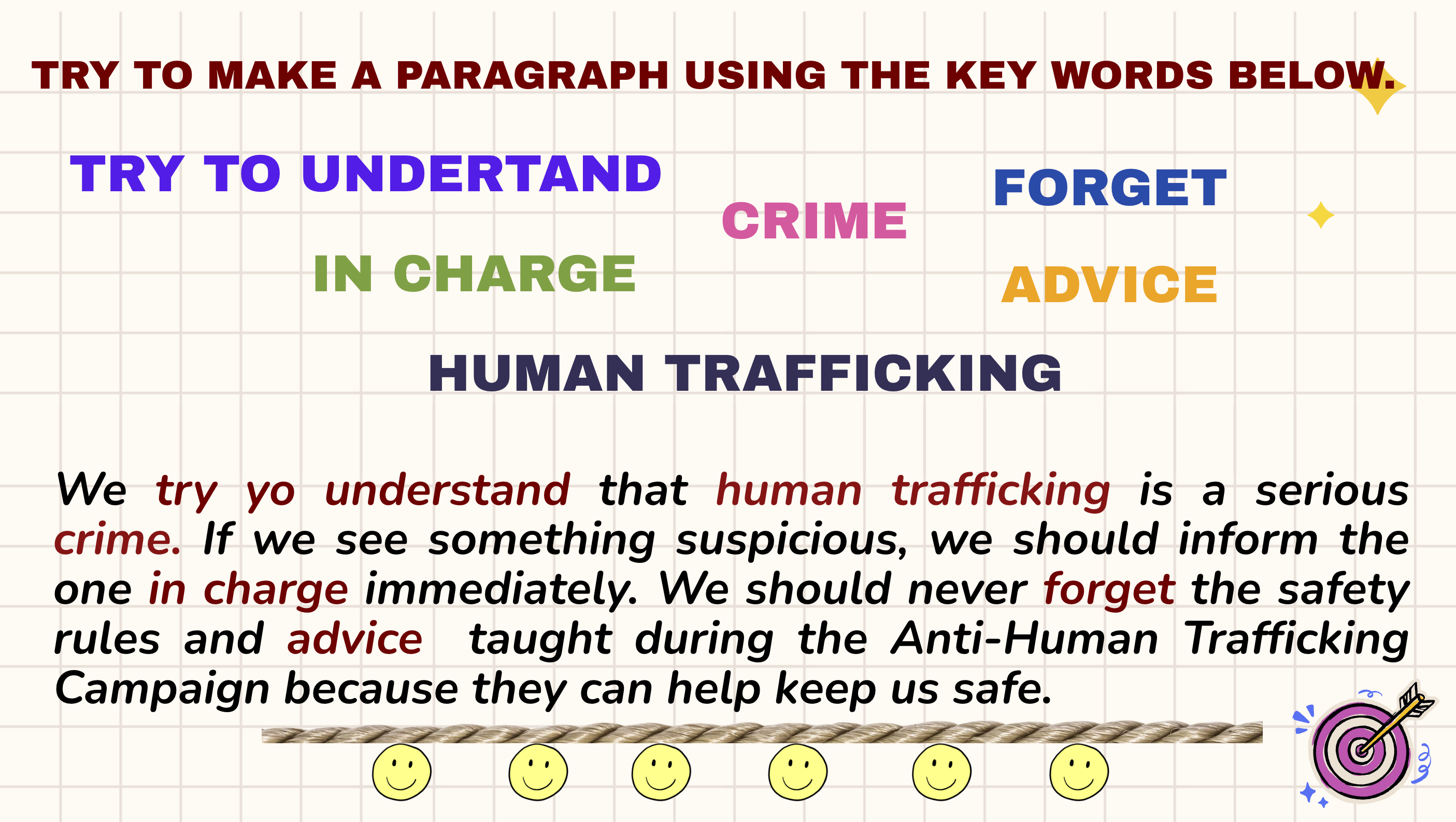
Unlock a set of key words (for example: trafficking, trafficker, victim, consent, exploitation, privacy, confidential). Students define each term in their own words, then use them to build a short, well-structured paragraph — topic sentence, supporting details, closing sentence — about staying safe. Writing the words into real sentences cements both the language skill and the safety message.
Lesson · "Spot the Risk, Stay Safe"
Social StudiesObjective
Students can recognise situations that may put them at risk and identify ways to stay safe.
How to run it — Do or Don't
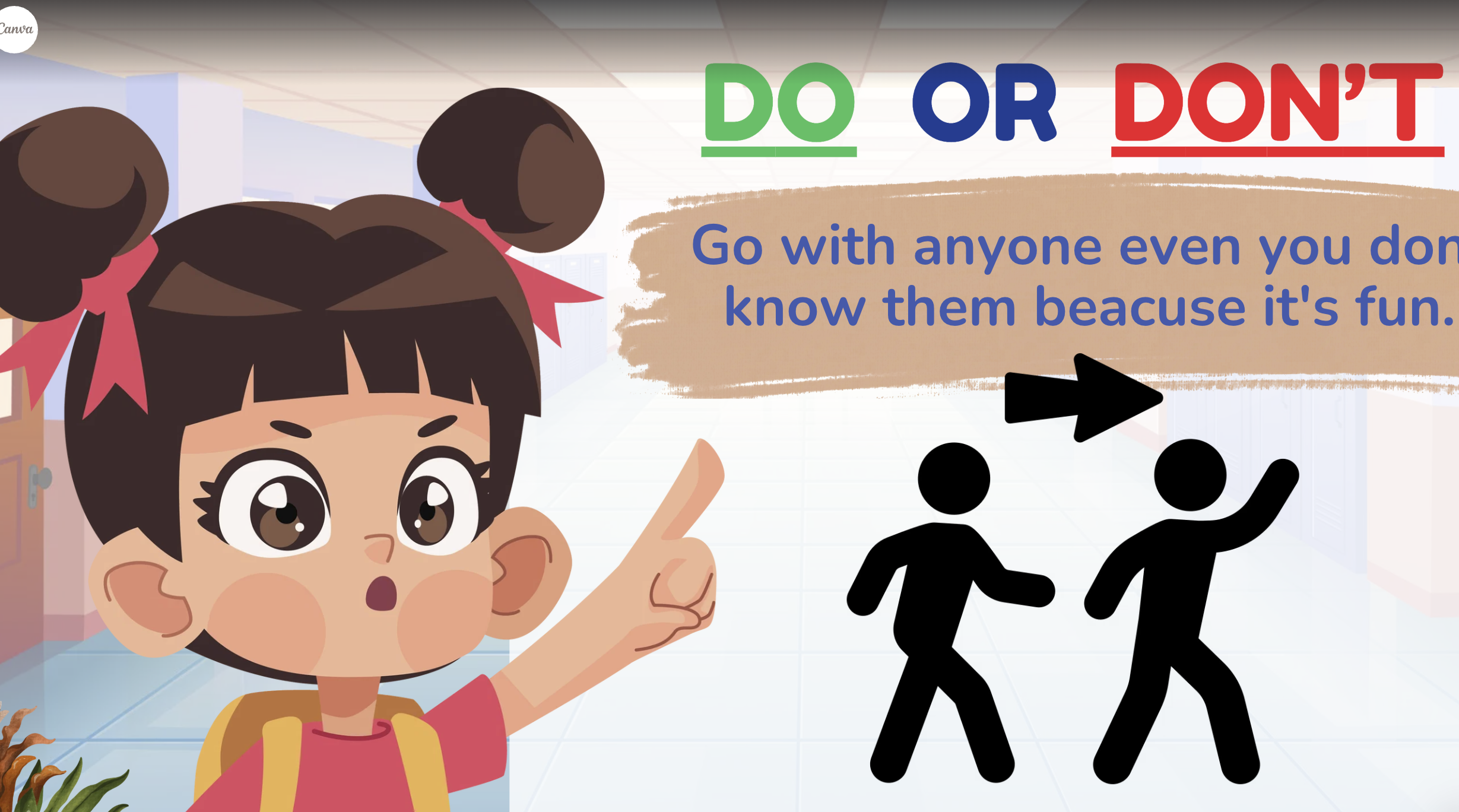
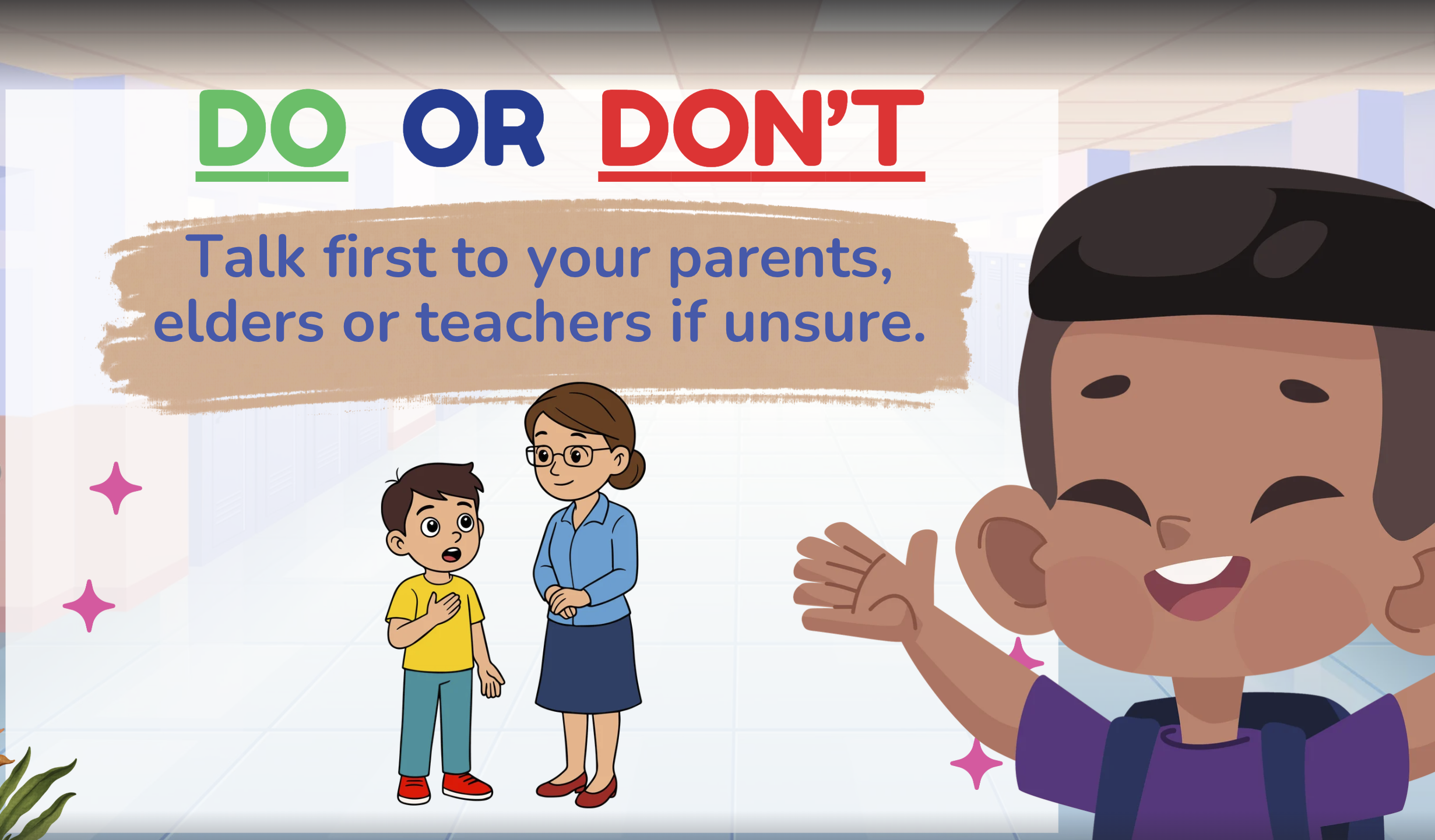
Run a "Do or Don't" sorting game with everyday situations, and let students decide which is safe. A clear example: Don't — sharing your personal information with everybody. Discuss why each "don't" is risky and what a responsible, safe choice looks like instead, linking safety to being a caring, responsible member of the community.
Lesson · "Guess the Organ"
ScienceObjective
Students can recognise the dangers of illegal organ trafficking and understand the importance of protecting themselves from people who may exploit or deceive them.
How to run it
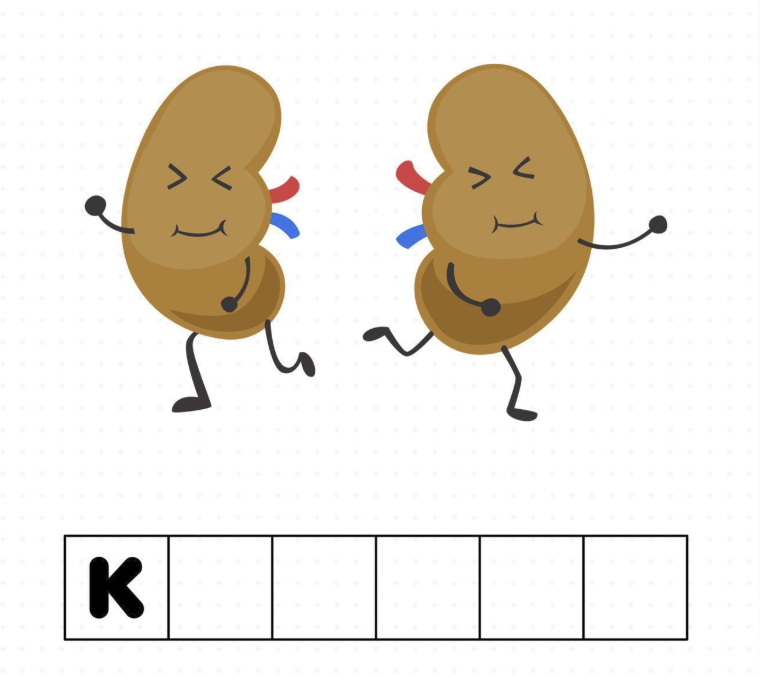
While studying internal organs, let students guess which organ is shown. Once they've named it, gently explain — at an age-appropriate level — that organ removal and sale is a real and illegal form of human trafficking, and that traffickers may use deception to exploit vulnerable people. Keep the tone protective and factual, never frightening.
Two principles hold it all together. First, you are the captain of your own ship — there is no required number of lessons; your teacher's instinct tells you where the topic fits and where it doesn't. Second, it is a collaborative effort: teachers of one subject across Grades 1–9 should sit down together, because the spiral only works if everyone plays their part. No one carries this mission alone.
08Beyond the classroom: whole-school practice
Integration goes beyond the four walls of the classroom. A full implementation lives in the culture of the whole school. Practices you can adopt:
- Campaign posters around campus. Student work from art and religion classes, displayed so even the youngest children read and absorb the message during breaks.
- A Talitha Kum club. Students proudly call themselves "Talitha Kum kids" and identify as advocates — visible proof that empowerment is working.
- The orange badge or bow. Worn by students and teachers as part of the uniform, a small daily sign of commitment.
- Integration into activities. Not every activity, but the ones that fit — creative, enjoyable events where students express support for the campaign.
- Student-led exhibits off campus. Selected students lead activities and exhibitions beyond the school, showing they've been empowered to carry the message themselves.
- An annual awareness marathon. A celebration that reaches beyond students to parents, the wider community and even local government — turning stakeholders into partners.
- An annual culmination. Many schools mark a high point each year on 8 February, the feast of St. Josephine Bakhita (patron of trafficking survivors) — a natural anchor date for a school-wide event.
09Four dignity activities you can run tomorrow
Awareness of trafficking rests on a deeper foundation: the conviction that every person has worth that can never be taken away. These four simple, low-cost activities help young people reconnect with their own dignity and open their hearts to others. Run them as-is, or strip out the faith language for a secular setting — the core lesson works either way.
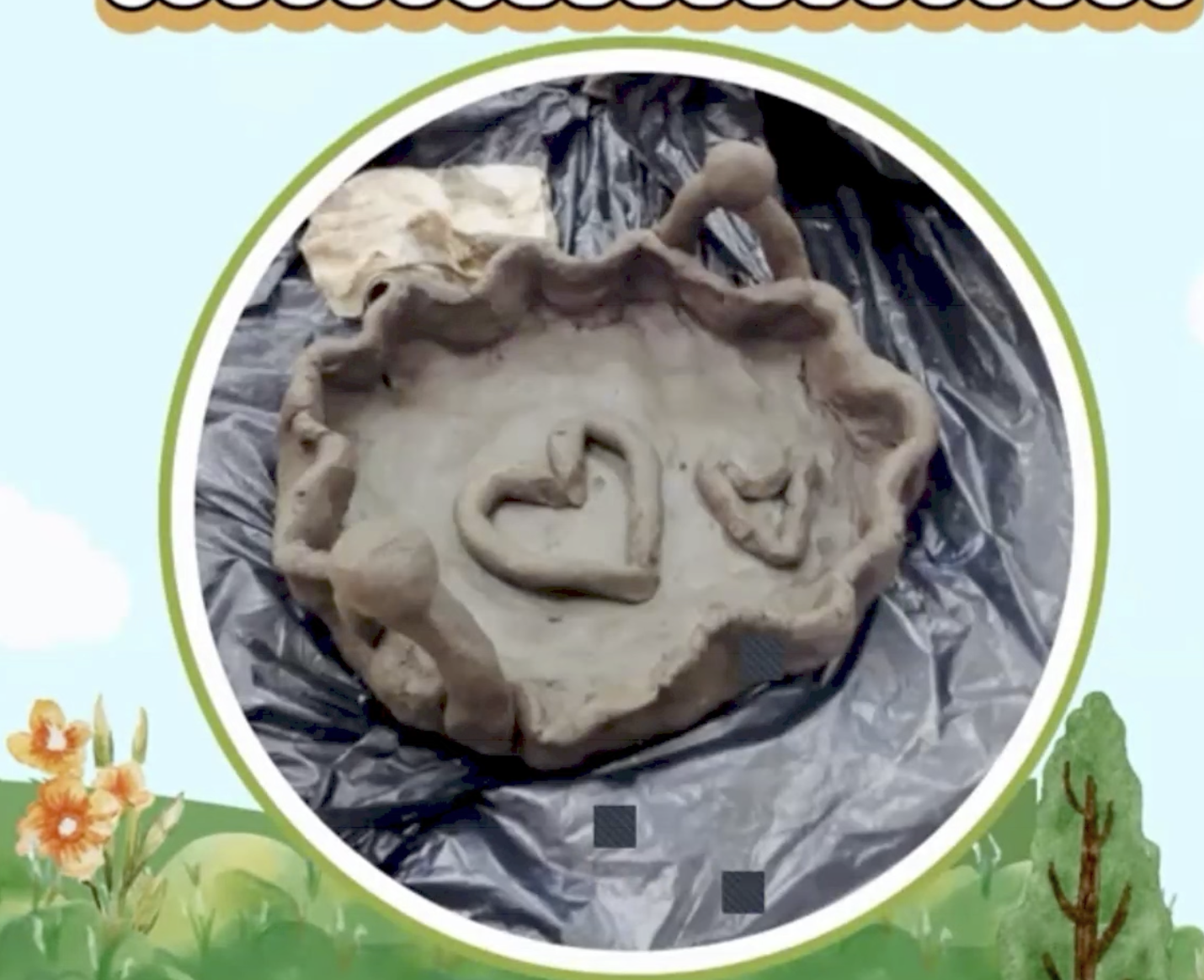
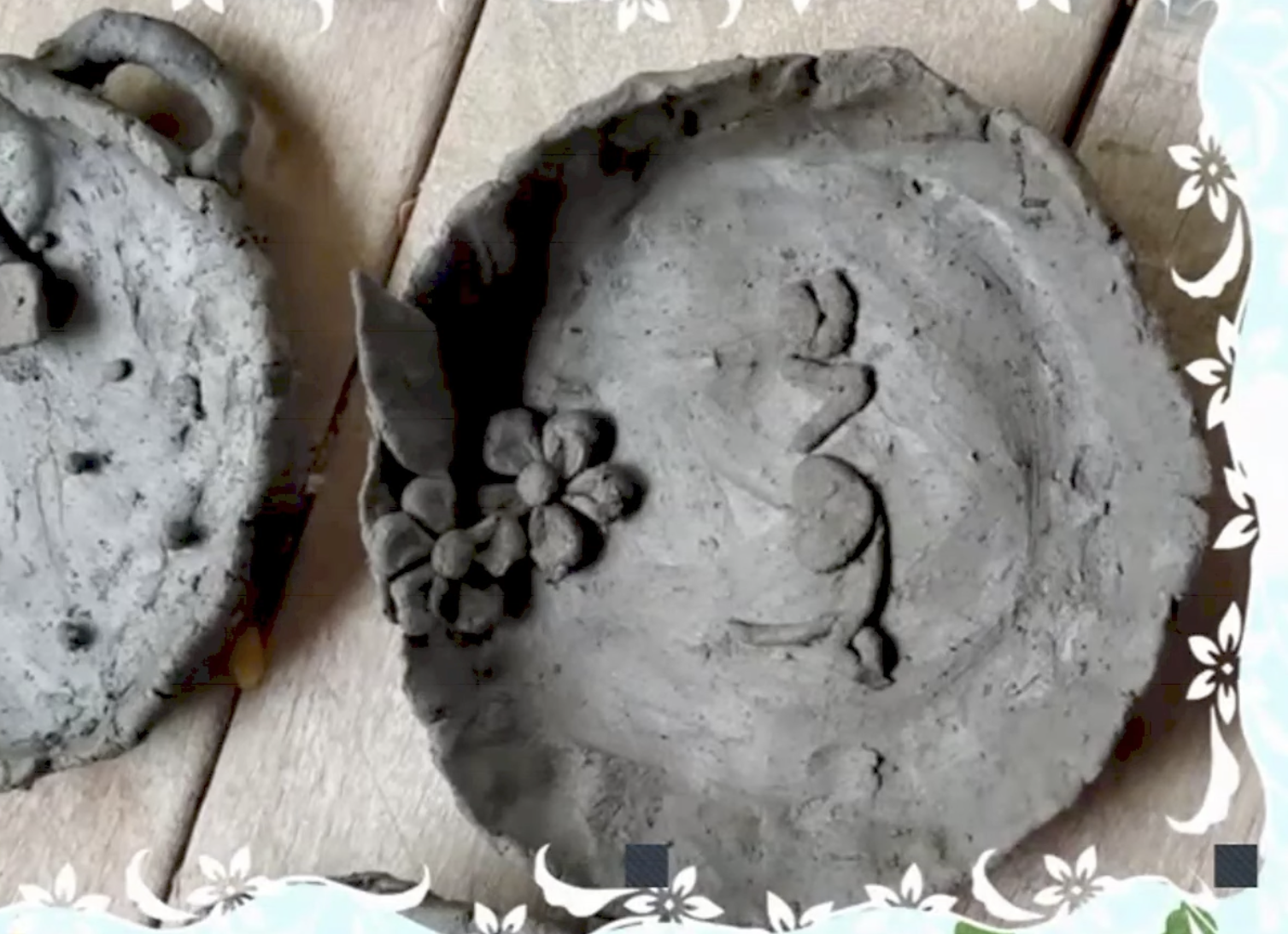
Activity 1 · Clay: The Vessel of Blessing
~15 minHow to run it
Be still and breathe; silently ask, "What do I need help with right now?" Shape a small vessel — a cup or bowl — for about 5 minutes. Then set it down and walk among the others' vessels, and to each one silently add something beautiful: a small design, a pattern. No talking, no asking, no explaining — just add with your heart. Do this three or four times, then return to your own vessel.
The reveal
Your vessel is different now — no longer only your work, but touched by the kindness of others. The lesson: sometimes we don't even know what we're missing, but when we open our hearts, help arrives through the hands of those beside us.
Activity 2 · Pictures of Memory
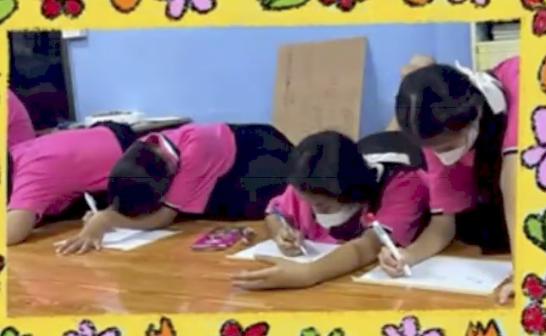
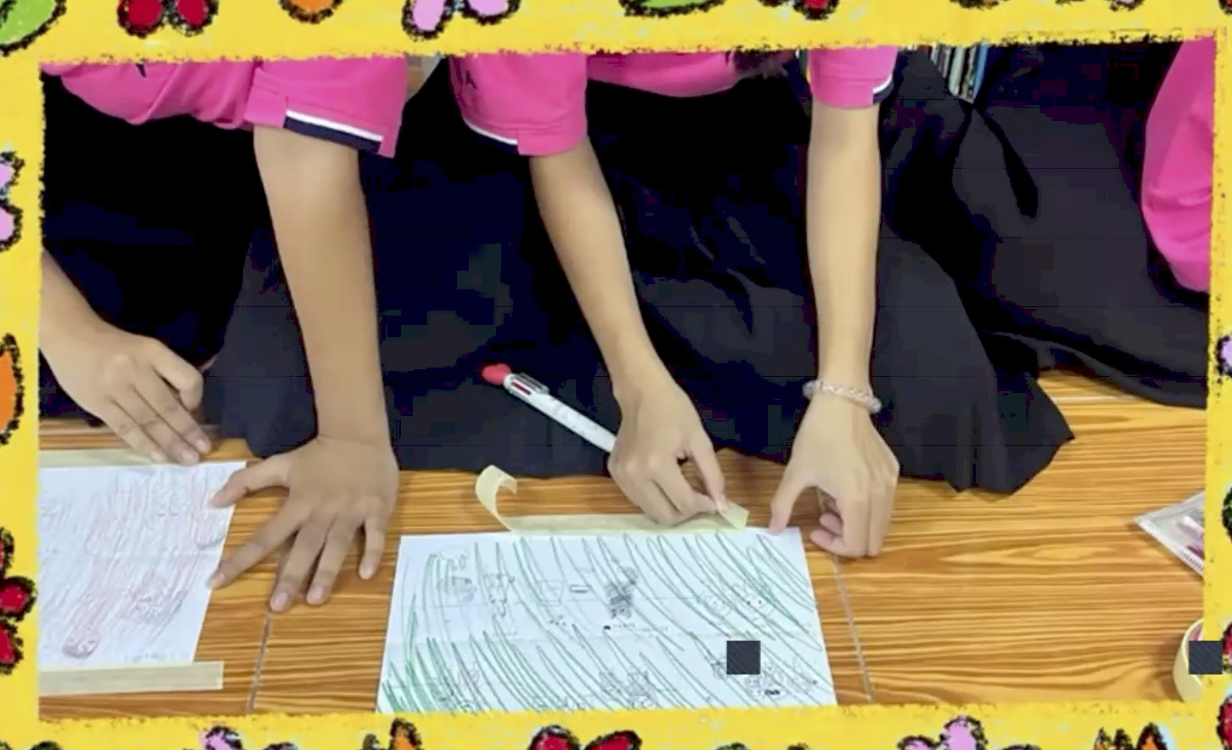
~30 minHow to run it
Frame an A4 sheet with a masking-tape border, then divide the inside into six boxes. In each box, draw one of your six happiest or most precious memories. Share one memory each in small groups (one minute per person), then lay all the drawings on the floor and walk around appreciating them. Now the twist: each person chooses someone else's picture and, for one second, damages it — a line, a scribble, a mark.
The reveal
Ask quietly: "How do I feel seeing my picture damaged? Has this ever happened in real life?" Then slowly peel off the tape. The bordered strip underneath was never touched — a picture of true value that cannot be taken away. We are not perfect, but we are valuable; even when something is damaged, our worth remains.
Activity 3 · Guarding the Value Within a Fragile Shell
~30–45 minHow to run it
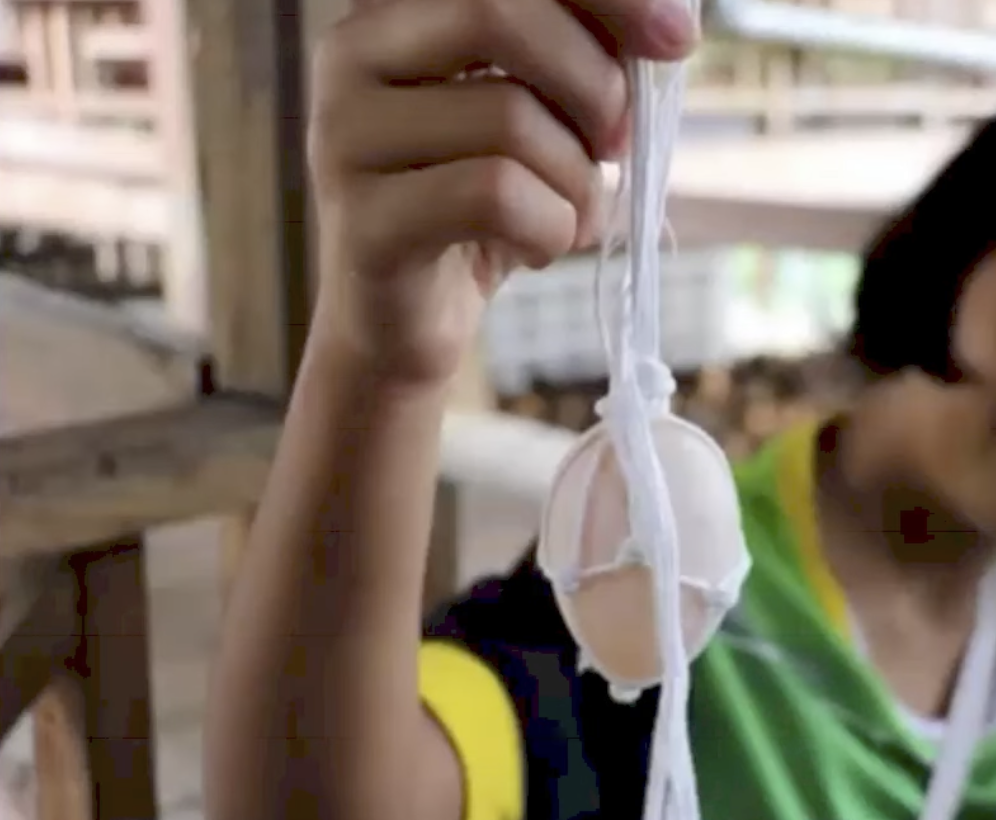
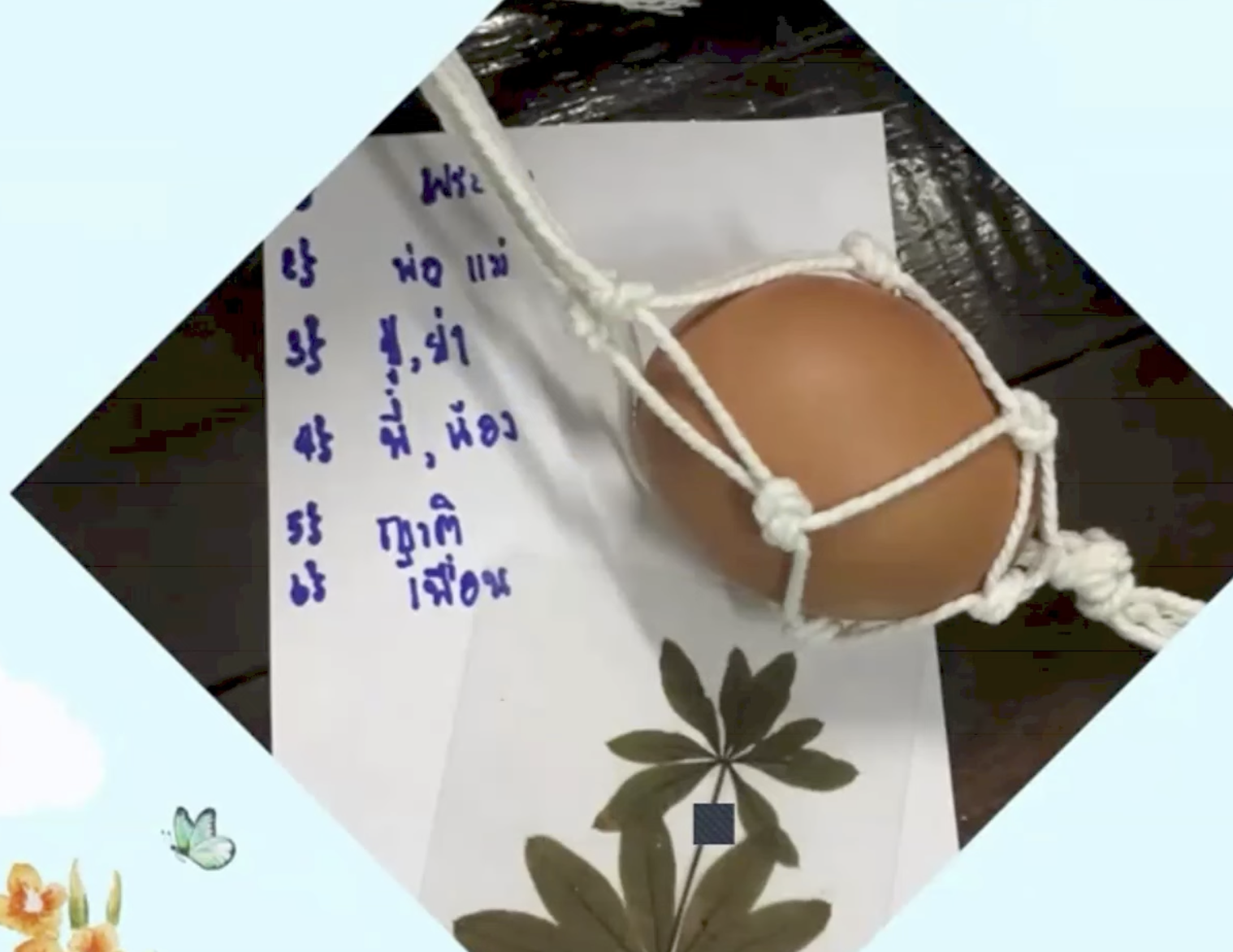
Each participant builds a net or protective cover for their egg (10–15 min). The layers of the net represent the important people who protect them in life. Then they must keep the egg safe and carry it everywhere throughout the rest of the session or talk.
Reflect together
In small groups, still holding the egg: What does this egg represent? How did it feel to protect something fragile? How did teamwork help? How can we care for our own value and others'? The egg is as fragile as a person's dignity — which a single word or action can harm. Protecting that value is everyone's responsibility.
Activity 4 · Raise Me Up: Beautifying a Photo
~20 minHow to run it
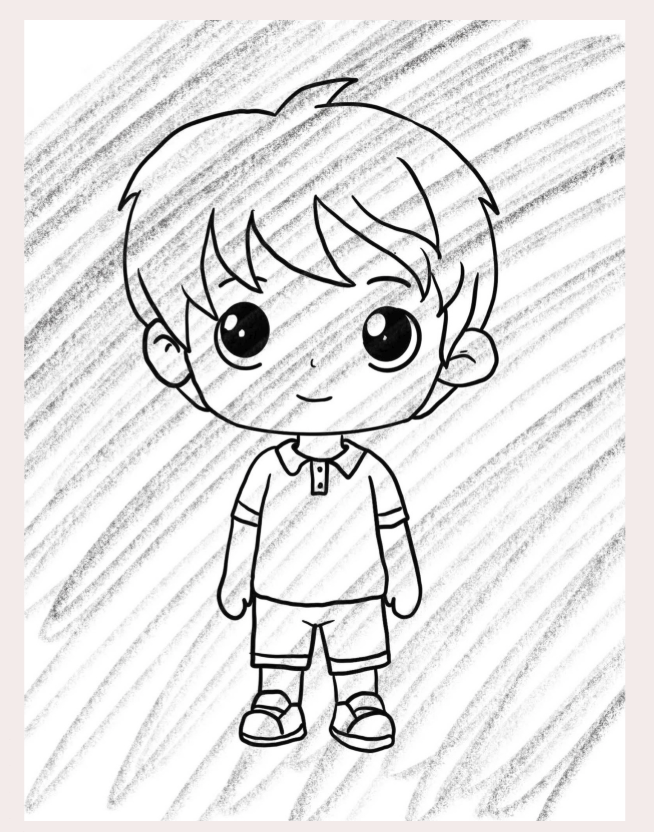
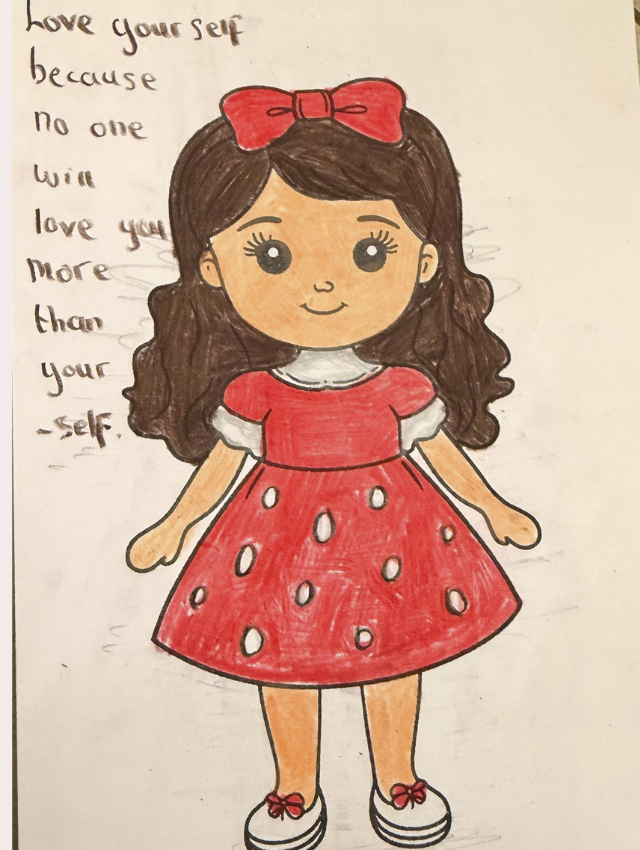
Give each student a cartoon drawing of a child that has been "damaged" — crossed out and scribbled over with pencil marks. Invite them to raise it up: colour it in and make it beautiful again. As they work, talk about how a person who has been hurt, put down or exploited can still be lifted back to worth and beauty — which is the very heart of "Talitha Kum: arise."
The lesson
No mark is the end of the story. Just as the students restore the picture, every person can be raised up, healed and treated with dignity. We can each be someone who "raises up" others rather than crossing them out.
10A framework for empowering students
One presenter summarised the whole approach in five parts — a useful checklist for any school building its programme:
- C — Curriculum integration. Weave trafficking awareness into lessons using the spiral approach.
- O — Online safety. Teach students to navigate fake news and online risks, since much recruitment now happens online.
- T — Trauma-informed approach. Speak to students in language that names their strengths and their value — this is where human dignity lives.
- S — Safety reporting. Encourage students to speak openly to teachers, parents or trusted adults about anything suspicious.
- S — Support system. Remember no one does this alone — students, teachers, families and community move forward hand in hand.
A word on realistic expectations: we never place the whole burden on children. For a young student, simply becoming aware and learning to protect themselves is already a big achievement. Awareness spreads naturally — children share what they learn at home, parents learn from them, and the community follows. That ripple is the first stage of prevention: telling the story to people who never knew trafficking existed, so they can protect themselves and others.
11Challenges — and how to meet them
- It needs a plan from the top. Without a well-drafted annual plan and clear direction from administrators, integration becomes chaotic. Leadership support makes teachers, students and families follow.
- It can feel like a burden. Amid deadlines and paperwork, this only feels like extra weight without the willingness to embrace it as mission. Optimism and teamwork are the antidote.
- Teamwork can break down. The spiral fails if even one teacher opts out. Coordinate across the grade levels of each subject.
- Students may find it repetitive. "I learned this in Grade 1 already." The spiral approach is the cure — new depth each year keeps it fresh.
- There's no fixed duration. This is an ongoing, progressive campaign, not a one-semester unit. Integrate whenever it genuinely fits, and mark a yearly culmination to help it stick.
12Adapt it to your context
Everything here comes from a Thai, faith-based, Catholic-school setting — but the method travels. The presenters were emphatic that activities should be adapted to your participants and their context, not delivered by a fixed rule. To make this your own:
- Keep the universal core — human dignity, awareness, protection — and translate the rest for your community, whether secular, interfaith or public.
- Map your own curriculum. Use the grade tables as a model, then find the lessons in your syllabus where trafficking naturally fits.
- Localise the specifics. Swap in your country's statistics, helpline numbers and legal context; choose an anchor date that fits your calendar.
- Match your students. Adjust language, examples and depth to age, ability and lived experience — and never share more than is safe.
- Build the team first. Get colleagues and leadership on board before you begin; the spiral is a group effort.
Resources to go further
- Talitha Kum International — official campaign materials and country contacts.
- Talitha Kum short videos — brief, classroom-friendly clips.
- Feast of St. Josephine Bakhita — 8 February. A ready-made annual anchor for a school-wide event.
- Your local anti-trafficking helpline. Look one up for your country and share it with students; a saved number is real protection.
This blog summarises an educators' webinar from Talitha Kum Thailand and the network's public mission materials, for teachers and adults to adapt to their own context. It is a sensitive topic; keep content age-appropriate, know your school's safeguarding process before you teach, and if any student appears personally affected, respond with care and connect them to qualified local support.